-2.svg "Barista Chaw Su Logo")
Arabica vs. Robusta: The Essential Guide for Coffee Enjoyers & Café Owners

Coffee is the world's favorite daily ritual, but beneath every complex pour-over and rich espresso shot lies a foundational, historic conflict: the battle—or partnership—between two dominant bean species. For the coffee enjoyer, this choice dictates flavor and energy. For the barista, it defines the recipe. For the café owner, it determines profit and resilience.
Welcome to the definitive guide on the two great rivals of the coffee world: Arabica (Coffea Arabica) and Robusta (Coffea Canephora).
Historically, Arabica has been hailed as the connoisseur’s choice, prized for its nuanced flavor and delicate acidity. Conversely, Robusta has long been regarded as the workhorse, known for its bold strength, thick crema, and resilience. But the modern coffee landscape is changing. Today, both beans play critical roles in the industry, from high-end single-origin offerings to traditional espresso blends. Understanding their fundamental differences in flavor, genetics, economics, and application is essential to truly mastering the coffee craft.
In this deep dive, we will explore the genetic blueprints of these species, decode the chemistry behind their unique flavor profiles, analyze the global economic forces that drive their production, and provide practical blending and brewing tips for baristas and café owners. Prepare to refine your palate, optimize your blends, and gain a sharper understanding of what truly makes a great cup of coffee.
The Botanical and Genetic Blueprint
To understand why Arabica and Robusta taste so different, we must look at the plants themselves—their genetic code, their preferred environments, and their natural defenses. The habitat in which they thrive shapes every characteristic of the final bean.
Coffea Arabica—The Delicate Perfectionist
Arabica is, botanically speaking, the more fragile and demanding of the two species. It originated in the highlands of Ethiopia and thrives in specific, challenging conditions.
Altitude, Climate, and Growth Cycle
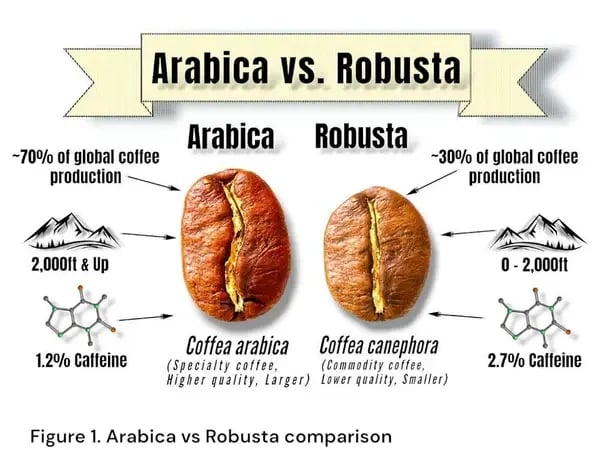
Arabica trees demand high altitudes, typically flourishing between 2,000 and 6,000 feet (600 to 1,800 meters) above sea level. This specific requirement is critical for flavor development. At these elevations, the combination of hot days and cool nights slows down the maturation of the coffee cherries. This prolonged growth cycle allows the beans inside to develop a greater concentration of complex sugars, oils, and aromatic acids, resulting in the refined, nuanced flavor profile that specialty coffee drinkers cherish. Arabica requires steady rainfall and consistent, sub-tropical climates to flourish.
Arabica beans are grown at higher altitudes and are much denser than Robusta. This density affects how water flows through the coffee puck. Once you’ve chosen your bean, the next step in ensuring a balanced extraction is a level, consistent press. Learn how to master this in our guide to [The Art of Tamping].
Genetic Makeup and Disease Sensitivity
Genetically, Coffea Arabica is a tetraploid, possessing 44 chromosomes. This genetic makeup makes it highly susceptible to pests and diseases, particularly coffee leaf rust (roya). Because Arabica lacks natural defenses, it requires constant care, including specific climates, richer soil, and often more resources like irrigation and pest control. This higher cultivation difficulty contributes directly to the higher price point of Arabica beans on the global market.
Coffea Canephora (Robusta)—The Resilient Pioneer
Robusta earned its name from its inherent ability to resist environmental challenges. Originating in western and central sub-Saharan Africa, it has become the champion of resilience in challenging growing environments.
Altitude and Resilience
Unlike its delicate cousin, Robusta thrives at lower altitudes, often below 1,000 feet (300 meters). It tolerates higher temperatures and can withstand hotter, more humid climates with less rainfall and more direct sunlight. This hardiness makes it much easier and cheaper to cultivate, as it requires less meticulous care and is more resistant to pests and disease. For café owners and roasters, this translates to a more stable supply chain and a significantly lower commodity price.
Genetic Makeup and Natural Defense
Robusta is a diploid, possessing only 22 chromosomes. This simpler genetic structure grants it a robust defense mechanism: caffeine. The caffeine content in Robusta is approximately double that of Arabica (2.5% vs. 1.5% average, respectively). This high level of caffeine acts as a natural pest repellent, protecting the plant and cementing its nickname as "the resilient pioneer."
Decoding the Flavor: Acidity, Sugar, and Aromatic Compounds
The true difference between the two species is experienced on the palate. The specific chemical composition of each bean dictates everything from the final cup’s body and sweetness to its crema thickness. Understanding the chemistry helps baristas and café owners select the perfect bean for a specific drink.
Arabica’s Complex Profile: The Role of Sugars and Lipids
The flavor complexity of Arabica is derived from its rich content of sugars and lipids (oils). Arabica beans contain approximately 60% more sugar and almost twice the lipids compared to Robusta.
Unique Insight: The Maillard Reaction Accelerator
During the roasting process, these sugars and amino acids undergo the Maillard Reaction, which is responsible for creating hundreds of complex aromatic compounds, including caramelization and browning notes. The higher sugar content in Arabica results in a greater intensity of these reactions, yielding flavors that are smoother, sweeter, and more nuanced. Common flavor notes for Arabica include:
-
Fruity and Floral (high acidity creates a "brightness")
-
Chocolate and Caramel
-
Nutty and Sweet
The elevated acidity is another key feature, contributing a vibrant, lively taste that coffee connoisseurs appreciate. This is why Arabica coffee acidity and flavor notes are central to specialty coffee tasting protocols.
Robusta’s Boldness: Caffeine and Chlorogenic Acids
Robusta's flavor is dominated by its high concentration of caffeine and chlorogenic acids (CGAs). While CGAs act as potent antioxidants and contribute to certain Robusta coffee health benefits, they are also precursors to the strong, bitter compounds that characterize the bean's taste. Robusta is often described with flavor notes that are:
-
Earthy or Woody
-
Bold and Intense
-
Grainy or Nutty
Robusta is significantly less acidic than Arabica, resulting in a heavier, fuller-bodied feel on the palate, which can sometimes be described as lacking refinement when brewed on its own. However, this low acidity is sometimes preferred by drinkers with sensitive stomachs, such as those concerned about GERD or acid reflux.
The Caffeine Factor: Why Robusta Packs a Double Punch
The difference in caffeine content is staggering. Robusta contains roughly twice the caffeine of Arabica. This is the source of the traditional strong, full-bodied coffee experience and why Robusta is often sought after for its immediate "wake-up" effect. For café owners managing high-volume operations, Robusta’s punch allows them to deliver the strength customers expect, particularly in milk-heavy beverages, without over-extracting delicate Arabica beans.
Economic Giants: Production, Price, and Global Market Share
For café owners and roasters, the choice between these two beans is not just about taste—it's about business and market stability. The global production and trading dynamics of Arabica and Robusta are fundamentally different, impacting everything from commodity risk to retail pricing.
Global Production Dominance (Arabica vs. Robusta Ratios)
Arabica consistently dominates the global market, typically accounting for about 60% to 70% of total world production, while Robusta makes up the remaining 30% to 40%.
| Coffee Species | Global Share | Key Producing Countries |
| Arabica | ~60-70% | Brazil (40% of Arabica supply), Colombia, Ethiopia |
| Robusta | ~30-40% | Vietnam (World leader, over 40% of global Robusta), Brazil, Indonesia |
Brazil is the world's largest overall coffee producer, contributing significantly to both species, but the distinct focus of Vietnam on Robusta has cemented its role as the global market leader for this hardier bean.
The Price Differential: ICE Futures vs. Commodity Contracts
The two species are traded on different futures markets, highlighting their economic separation:
-
Arabica: Traded on the Intercontinental Exchange (ICE) in New York, often referred to as the "C" contract. Arabica is the world benchmark for coffee futures contracts and historically commands a much higher price due to its high demand, delicate cultivation, and the risks associated with its unstable supply. The price volatility can heavily impact the profit margins of specialty cafés.
-
Robusta: Primarily traded on the London International Financial Futures and Options Exchange (LIFFE). Robusta is generally cheaper because the plants are more resilient, require fewer resources, and yield more per hectare.
The current global market for Robusta and Arabica coffee beans is massive, projected to grow at a CAGR of 6.3% and reach an estimated USD 90.03 Billion by 2032, demonstrating the enduring global demand for both types of coffee.
The Specialty Coffee Divergence
While global consumption is increasing, consumer preference is steadily shifting toward specialty-grade Arabica coffee. This has created a two-tiered market:
-
Tier 1 (Specialty): Driven by consumers willing to pay a premium for high quality, single-origin Arabica, leading to better prices for specialty farmers.
-
Tier 2 (Commodity): Dominated by mass-market Robusta, often used in instant coffee and budget blends. The price for these commodity beans remains volatile, creating economic instability for smallholder farmers who make up the majority of global coffee producers.
Practical Application for Baristas and Café Owners
For the professional behind the bar, the distinction between Arabica and Robusta moves from theory to practice. The species chosen dictates the final texture, flavor harmony, and cost-effectiveness of every drink served.
The Art of Espresso Blending
Espresso is where the two beans famously meet. The traditional Italian approach utilizes a blend to achieve a perfect shot, something that is difficult to accomplish with 100% Arabica alone.
Why Traditional Italian Espresso Requires Robusta (Crema and Body)
The hallmark of a classic Italian espresso is a thick, reddish-brown foam known as crema. Robusta beans are exceptional at producing this layer for two main reasons:
-
Higher Density: Robusta beans are denser, leading to more gases (CO2) being trapped during roasting.
-
Lower Oil Content: The lower lipid content allows the emulsified gas bubbles to be more stable, creating a richer, more persistent crema.
A pure Arabica espresso often yields a beautiful, nuanced flavor but a thinner, lighter crema. This is why Italian roasters, especially those in Southern regions like Naples, often incorporate Robusta to achieve the desired crema, body, and intensity.
Balancing Act: Optimal Blending Ratios
The ideal Arabica vs Robusta blending ratio for espresso depends entirely on the desired profile, the use case (black espresso vs. milk drinks), and regional preferences:
-
100% Arabica: Favored for single-origin espresso and lighter, sweeter profiles (common in Northern Europe/Specialty Cafés). Best for highlighting fruity and floral notes.
-
80% Arabica / 20% Robusta: A popular balance for high-end espresso. The 20% Robusta adds crema, body, and caffeine while letting the Arabica complexity dominate.
-
60% Arabica / 40% Robusta: A very strong, traditional Italian blend (favored in Naples). Ideal for milk-based drinks like lattes and cappuccinos, as the Robusta punch cuts through the milk perfectly, ensuring the coffee flavor isn't lost. This is a key operational choice for café owners focused on high-volume milk drinks.
Brewing Methods That Favor Each Bean
Different brewing methods benefit from the distinct characteristics of each bean:
-
Arabica: Thrives in methods that highlight its clarity and nuance, such as Pour-Over (V60, Chemex) and French Press. These methods favor the complex aromatics and brighter acidity. Arabica's complexity is best preserved with medium to medium-light roasts.
-
Robusta: Its bold, low-acid nature makes it perfect for brewing methods that require strength or handle intense heat. This includes Moka Pot brewing, where the lower acidity and high heat tolerance prevent a burnt taste, and, of course, Instant Coffee, where its strength and lower cost are maximized.
The Future of Coffee: Resilience and the Fine Robusta Movement
The coffee industry is facing unprecedented environmental challenges, forcing a re-evaluation of the long-standing bias against Robusta. The species once considered merely a filler is now emerging as a champion of resilience and a source of specialty-grade quality.
Climate Change and the Arabica Crisis
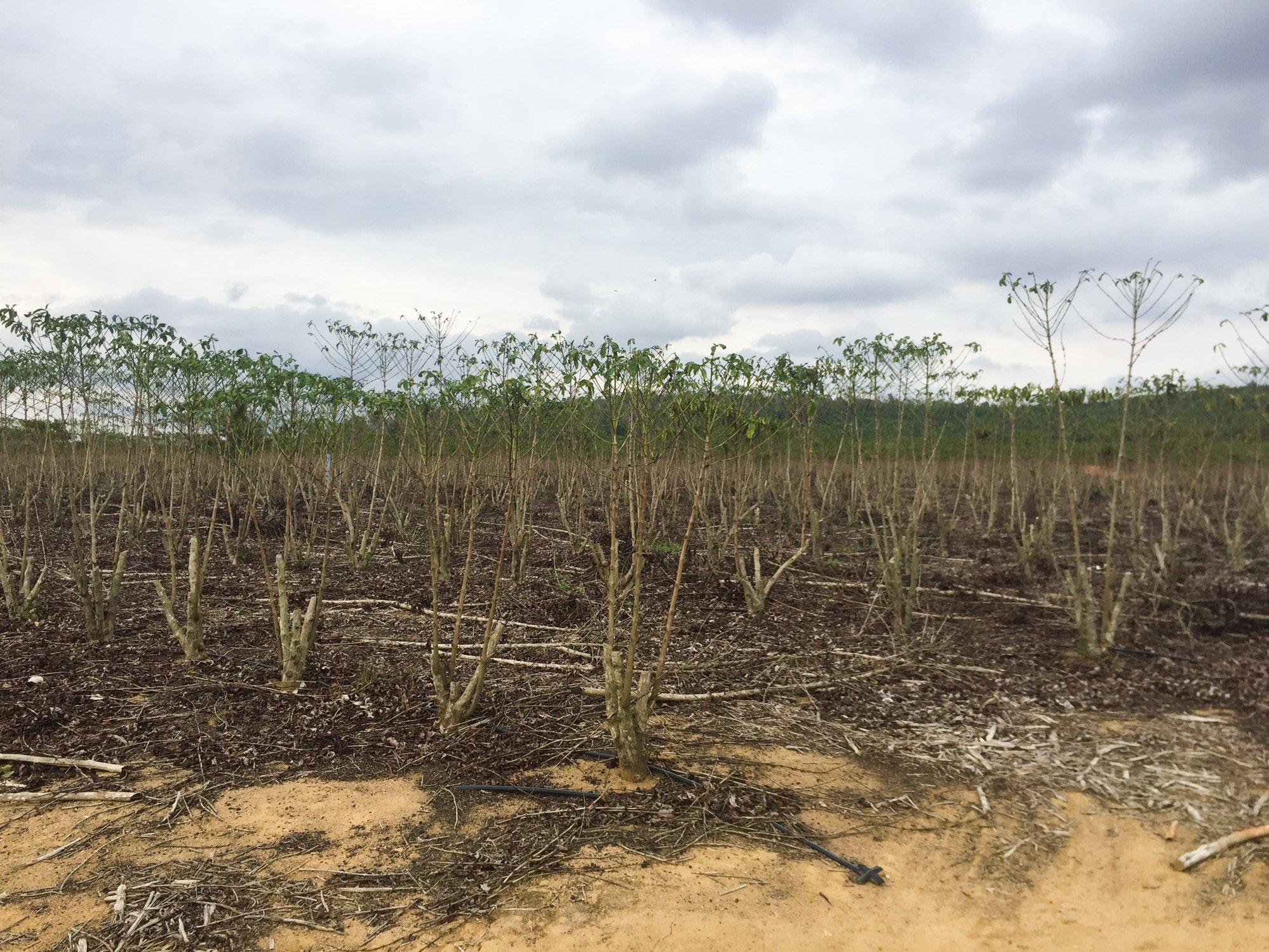
Climate change is presenting an existential threat to Arabica. Rising global temperatures and erratic weather patterns (droughts and extreme rainfall) are disrupting the delicate conditions Arabica requires. Research from World Coffee Research (WCR) and other bodies suggests that the highly suitable environments for Arabica coffee could decrease by as much as 50% by 2050.
For café owners, this means increasing price volatility and a risk of severe supply shortages in the future. As the global coffee supply shrinks, integrating high-quality, climate-resilient Robusta into blends becomes less of an option and more of a necessity for business continuity.
The Rise of Fine Robusta
The "less refined" reputation of Robusta is rapidly changing, driven by pioneering producers and the Fine Robusta movement specialty coffee. Inspired by the Specialty Coffee Association (SCA), this movement works to apply the same rigorous quality standards to Robusta as to Arabica.
-
The Standard: The Coffee Quality Institute (CQI) introduced specific Robusta standards in 2019, allowing Robusta beans to be graded and scored. Beans scoring 80 points or higher are classified as "Fine Robusta".
-
Premium Examples: Premium Robusta can exhibit flavors far beyond the traditional "earthy and rubbery" notes, occasionally showing hints of dark berries, rich fruits, or spices. A famous example is Monsooned Malabar Robusta from India, where beans are intentionally exposed to monsoon winds, giving them a unique, mellow, and aged flavor that commands a premium price.
This evolution means café owners now have the option to ethically source high-quality Robusta that provides the necessary body and crema for espresso without compromising flavor integrity.
Hybrid Innovation
To combat the Arabica crisis, researchers are increasingly focused on developing hybrid coffee varieties. These crosses aim to combine the complex flavor profile and sweetness of Arabica with the hardiness, disease resistance, and high yield of Robusta. These new, climate-ready strains are essential for ensuring the long-term sustainability of coffee production worldwide.
Quick Takeaways
-
Genetic Difference: Arabica has 44 chromosomes and is delicate; Robusta has 22 chromosomes and is hardy and disease-resistant.
-
Flavor Profile: Arabica is sweet, complex, and high in acidity due to its high sugar and lipid content. Robusta is bold, bitter, and low in acidity due to its high caffeine and chlorogenic acid content.
-
Caffeine Power: Robusta beans contain roughly double the caffeine of Arabica, acting as a natural pest deterrent and a key source of intensity in the cup.
-
Market Share: Arabica dominates global production (60-70%) and is the benchmark for high-end specialty coffee. Robusta (30-40%) is cheaper but essential for commodity products and blending.
-
Espresso Essential: Robusta is crucial for traditional Italian espresso blends because its density and lower oil content create a thick, stable, reddish-brown crema and add vital body that cuts through milk.
-
Climate Champion: Robusta is projected to be more viable as climate change accelerates, making the Fine Robusta movement critical for the future sustainability and quality of the global coffee supply.
Conclusion: The Harmony of Opposites
The classic debate of Arabica vs. Robusta is no longer a question of "better or worse," but rather one of synergy, sustainability, and purpose. For the coffee enjoyer, the beans represent a spectrum: from the bright, elegant notes of a single-origin Arabica to the powerful, bold intensity of a Robusta-heavy blend. Both offer an irreplaceable experience.
For the barista and café owner, this duality is an opportunity. Mastering the art of blending Arabica and Robusta is the key to creating a truly world-class espresso—one that offers the aromatic complexity consumers crave, the thick, persistent crema they expect, and the cost-effective consistency that keeps a business profitable. Furthermore, embracing the quality improvements coming from the Fine Robusta movement specialty coffee is not just about expanding your menu; it is about building a sustainable supply chain ready to meet the demands of a changing climate.
As an industry professional, your challenge is to move beyond the old prejudices. Explore the unique characteristics of high-quality Robusta from regions like Vietnam or India. Experiment with the blending ratios. Use Arabica for your delicate, high-margin pour-overs, and use a perfectly balanced blend to craft the foundational espresso drinks that drive your daily sales. By honoring both the delicate perfection of Arabica and the resilient strength of Robusta, you ensure the future and continued excellence of your coffee program.
The bright acidity of Arabica and the bold, chocolatey bitterness of Robusta each demand a specific milk texture to shine. A heavy Robusta blend often pairs beautifully with a thick, velvety cappuccino foam. Master the technique for any drink in our guide to [Coffee Milk Foaming]
Whether you’re an enjoyer looking for the perfect morning cup or a café owner building a coffee empire, the choice between Arabica and Robusta is fundamental. If you find the options overwhelming, remember that Barista Chaw Su is here if you need help about them. Visit our [Services Page] to see how we can help you master your brew, or read about Chaw Su’s dedication to coffee education on our [About Us] page
Frequently Asked Questions (FAQs)
Q: Why is Robusta usually cheaper than Arabica?
A: Robusta is generally cheaper because the plant is significantly hardier and more resilient. It can grow at lower altitudes, requires less specialized care, is more resistant to pests, and yields more crop per plant. These factors lead to lower production costs compared to the delicate, high-altitude Arabica plant. This economic reality helps explain the price differential on the commodity market.
Q: Which bean is better for making a Moka Pot or Turkish coffee?
A: The bold, low-acid profile of Robusta is traditionally better for methods like the Moka Pot or Turkish coffee, which use high heat and pressure (Moka Pot) or require a fine grind and a strong, bitter kick (Turkish coffee). Robusta's resistance to high temperatures prevents a burnt taste and its lower acidity contributes to a classic, full-bodied extraction.
Q: How does climate change specifically impact Arabica production?
A: Climate change is reducing the amount of suitable land for Arabica cultivation. Rising temperatures and erratic weather, such as droughts or excessive rain, stress the delicate Arabica plants, leading to lower yields, greater susceptibility to diseases like leaf rust, and a predicted decrease of up to 50% in suitable growing regions by 2050. This is why the search for a climate-resilient Arabica Robusta cross-breed is ongoing.
Q: What is the ideal Arabica vs Robusta blending ratio for espresso with milk?
A: For milk-based drinks like lattes and cappuccinos, a blend is highly recommended to ensure the coffee flavor is not lost. Ratios ranging from 80/20 to 60/40 (Arabica/Robusta) are common. The Robusta component adds necessary body and intensity, while the thick crema it produces allows the espresso shot to visually and texturally stand up to the steamed milk.
Q: Is the "Fine Robusta movement" making Robusta taste like Arabica?
A: No, the Fine Robusta movement is focused on maximizing Robusta's unique potential, not making it taste like Arabica. Fine Robusta still retains its defining low-acid, full-bodied characteristics and higher caffeine content, but meticulous processing removes negative flavors (like rubbery or woody notes), allowing premium notes of dark chocolate, nuts, and sometimes fruit to emerge.
Reader Feedback & Engagement
We’d love to hear your thoughts! Have you noticed a shift in the quality of Robusta, or do you stick strictly to 100% Arabica in your café? Share your favorite Arabica vs Robusta blending ratio for espresso in the comments below! If you found this guide helpful for your business or brewing, please share it on social media.
References
-
Carluccio's. The Ultimate Guide to Arabica vs Robusta Coffee Beans.
-
Coherent Market Insights. Robusta and Arabica Coffee Beans Market Forecast, 2025-2032.
-
Espresso International. 100% Robusta coffee.
-
International Coffee Organization (ICO). Latest Coffee Market Report.
-
IISD. Global Market Report: Coffee prices and sustainability. (Citing data from Panhuysen & Pierrot, 2020 and Grüter et al., 2022).
-
Hoffmann, James. The World Atlas of Coffee: From Beans to Brewing, 2nd Edition. (Referencing foundational knowledge on species and processing).
-
The Drive Coffee Company. Which Beans Do I Want For My Espresso? Arabica or Robusta beans?.
-5.svg "BA (600 x 450 px)-5")
Leave your thought here