-2.svg "Barista Chaw Su Logo")
Light vs. Dark Roast: Flavor, Caffeine, and Mastery
For the dedicated coffee enjoyer, the discerning barista, or the cafe owner building a premium menu, understanding the nuance of coffee roast levels is the foundation of a truly exceptional cup. You might be accustomed to ordering a "dark roast" for its comforting, bold intensity, or perhaps you gravitate toward a "light roast" for its refreshing, vibrant complexity. But what exactly happens inside the bean to create such drastically different flavor profiles? The journey from a dense, greenish seed to a beautifully caramelized brown bean is governed by precise science—and a little bit of roasting magic.
This isn't merely a preference for strength; it's a fundamental difference in chemistry. A lighter roast preserves the bean's inherent terroir—the unique environmental flavors of its origin—while a darker roast sacrifices those delicate notes to build a new flavor profile entirely defined by the heat. In this comprehensive guide, we'll peel back the layers of caramelization to explore the core science, debunk the most persistent caffeine myths, and equip you with the knowledge needed to choose the perfect light roast coffee or dark roast coffee for any brew method, whether for your own enjoyment or for delighting your clientele.
The Core Science: Roasting Time and Temperature
The difference between a vibrant, acidic light roast and a smoky, bittersweet dark roast is measured in minutes, degrees, and audible cracks. At the heart of this transformation is the roasting machine, where the green bean is subjected to controlled thermal energy, fundamentally altering its chemical and physical structure. As a coffee professional or dedicated home brewer, grasping this process is crucial for predicting flavor outcomes.
From Green Bean to Brown: The Roasting Stages
The roasting process is typically broken down into three phases: drying, browning, and development. The critical transitions are marked by two distinct auditory events: the first crack and the second crack.
First Crack: The Marker for Light Roast Coffee
The first crack occurs when the internal temperature of the bean reaches approximately 196°C to 205°C (385°F to 401°F). At this point, the buildup of steam and gases (primarily CO2) inside the bean becomes so intense that the cell structure breaks, resulting in a distinct "pop"—similar to popcorn, but quieter.
-
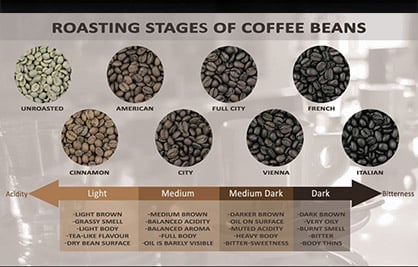
Light Roast Coffee profiles, often labeled Cinnamon Roast, New England Roast, or Nordic Roast, conclude shortly after or right at the end of the first crack.
-
The goal here is preservation: to retain the maximum amount of the bean’s volatile organic compounds, preserving the delicate, complex flavors of its origin. These coffees are bright, highly acidic, and tend to exhibit fruity, floral, or citrus notes. This is why premium single-origin beans, which showcase unique flavor characteristics of light roasted beans, are almost always roasted light.
Second Crack: The Gateway to Dark Roast Coffee
If the roasting continues, the bean enters the second crack, usually between 220°C to 230°C (428°F to 446°F). This is a softer, more rapid, snap-and-crackle sound, signaling a more dramatic breakdown of the cell walls and further loss of moisture.
-
The start of the second crack typically marks the beginning of the medium-dark spectrum (Full City Roast), and roasting well beyond it leads to true dark roast coffee (Vienna, French, or Italian Roast).
-
At this stage, the flavor of the origin is almost completely obscured. The taste profile is now dominated by the roast profile itself: smoky, bold, and bittersweet.
Physical Changes: Density and Oiliness
A clear physical difference underscores the flavor variance: the difference in light roast density vs dark roast density.
-
Light Roasts are denser and smaller because they have lost less moisture and expanded less during the short roast time. Their surface is matte and dry, as the internal oils have not yet migrated outward.
-
Dark Roasts are significantly lighter by weight, having lost up to 15% more mass due to moisture evaporation and gas loss. They are larger, less dense, and notably oily on the surface, which is a visual indicator that the internal oils have been pushed out by extreme heat. For baristas, this difference in density dictates grinding adjustments and brew ratios.
Unique Insight: The Maillard Reaction and Caramelization
The transition from light to dark is driven by two main chemical processes. The Maillard reaction, which is the browning reaction between amino acids and reducing sugars, dominates the development phase of light and medium roasts, creating complexity and sweetness. As the temperature climbs, caramelization (the browning of sugars alone) takes over, leading to rich, roasty, and bittersweet notes. The longer the roast, the more simple sugars are converted, meaning a light roast coffee actually retains more of the original, complex sugars of the bean, giving it a natural, subtle sweetness that is distinct from the burnt-sugar sweetness of a dark roast.
Flavor Chemistry: Acidity, Sweetness, and Bitterness
The cup profile—defined by its acidity, body (mouthfeel), and flavor notes—is the direct result of the chemical reactions described above. For a cafe owner or barista, describing these nuances accurately to customers is key to guiding their choice.
Bright and Lively: The Light Roast Profile
Light roasts are the choice for those who want to taste the origin of the bean. The dominant characteristic is acidity. This is not the sharp, sour acidity of bad coffee, but a pleasant, vibrant, or citric quality often described as "bright," "crisp," or "lively".
-
Tasting Notes: Expect floral, tea-like, berry, or citrus fruit notes. The specific notes are highly dependent on the varietal and processing (e.g., Ethiopian Yirgacheffe might be blueberry and jasmine; a washed Kenyan might be tomato or blackcurrant).
-
Body: They typically have a light body and a clean, delicate finish, lacking the heavy mouthfeel of darker roasts.
Bold and Robust: The Dark Roast Profile
Dark roast coffee prioritizes a universally familiar, consistent flavor born from the roasting process itself. Bitterness replaces acidity as the primary sensory experience.
-
Tasting Notes: The dominant notes are typically rich, roasty, and bittersweet—often characterized by caramel, dark chocolate, toasted nuts, or even smokiness. The origin characteristics are muted or completely absent, which is why these roasts are often used to mask lower-quality green beans.
-
Body: Dark roasts have a fuller body and a rich, heavier mouthfeel due to the release of oils and the restructuring of the bean's cellulose.
The Acidity Factor: Why Dark Roasts Feel Smoother
A critical point for both customer education and purchasing decisions is the impact of acidity. While light roast coffee is known for its high, pleasant acidity, darker roasts are frequently perceived as smoother.
-
Chemical Breakdown: A 2025 study published in Food Chemistry found that dark roasts experience a significant breakdown of non-volatile compounds that contribute to acidity, resulting in a lower overall pH level in the final brew. This chemical change is why darker roasts are often cited as being easier on the stomach for those with acid reflux or sensitive digestion. The smoother, less puckering sensation is due to the destruction of the citric and malic acids that give light roasts their characteristic brightness.
-
The Unique Perspective: Acidity is vital for flavor balance. As James Hoffmann notes in The World Atlas of Coffee, while espresso requires intensity, a balanced coffee is key to preventing a strong cup from tasting unbalanced. Dark roasts achieve "balance" by reducing the acidic compounds; light roasts achieve it by balancing high acidity with natural sweetness.
Sugar Breakdown: Caramelization vs. Origin Flavor
As the roast deepens, the sugars change.
-
Light roasts retain more complex carbohydrates and non-volatile acids.
-
Dark roasts convert these into simple sugars and then, through caramelization and pyrolysis, into melanoidins and other bitter compounds like phenylindanes. The study mentioned earlier found that higher roast levels can cut sugar content by nearly 50%, fundamentally shifting the flavor from fruity/floral to smoky/chocolate. This process of dry distillation is what creates the "roasty" or "toasted" characteristics that many people associate with traditional coffee flavor.
Myth vs. Fact: Caffeine and Health Benefits
The common wisdom—that a bold, intense dark roast coffee must contain more caffeine—is one of the most persistent myths in the coffee industry. For baristas and cafe owners, correcting this misconception with customers is a daily task.
Debunking the Caffeine Myth
In reality, light roast coffee often contains slightly more caffeine than its darker counterpart, especially when measured by volume (scoop).
-
The Scientific Factor (By Weight): When measured by weight (gram for gram), the difference in caffeine between light and dark roasts is minimal, sometimes virtually non-existent. Caffeine is extremely heat stable, and the small amount burned off over a longer roast time is largely insignificant.
-
The Density Factor (By Volume): This is where the difference becomes noticeable. Light roast beans are denser because they have lost less mass and water, meaning a single scoop of light roast beans contains more individual beans (and therefore slightly more caffeine) than an equal scoop of expanded, less dense dark roast beans.
-
Conclusion for the Customer: If a customer asks, "Is my blonde roast coffee stronger?" The honest answer is: slightly, by volume, but the "strong" flavor of a dark roast comes from its bold, caramelized oils, not its caffeine content.
The Antioxidant Advantage
Beyond taste, the choice between coffee roast levels can impact perceived health benefits.
-
Polyphenol Content: A 2020 study found that light roast coffees had the highest polyphenol content and antioxidant capacity. Polyphenols are plant-based compounds linked to various health benefits, including reducing inflammation.
-
The Stomach Factor: While light roasts may have more antioxidants, the lower acidity of dark roasts makes them more advantageous for people with digestive issues. As one source notes, dark roast is generally considered easier on the stomach because of the breakdown of acidic compounds. This trade-off—antioxidants vs. low acidity—is an important consideration for your health-conscious customers.
Unique Insight for Cafe Owners: The Roasting Sweet Spot
For cafe owners concerned with health, quality, and flavor, aiming for a Specialty Dark roast level (around an Agtron number of 55-61) is key. This level retains more caramelization and body than a medium roast but is stopped just before the point of "complete loss of terroir," where the bean quality is masked by a purely roasty flavor. This profile delivers the familiar 'dark' richness without resorting to the heavily charred, low-quality roasting often associated with commercial 'Very Dark' levels, ensuring the best of both worlds.
Mastering the Brew: Choosing Your Roast for the Method
The roast level and the brewing method are inextricably linked. The cell structure, density, and chemical makeup of the bean determine how efficiently and effectively water can extract flavor compounds. Choosing the wrong combination can result in a sour, under-extracted disaster or a thin, over-extracted nightmare.
Highlighting Terroir: Light Roasts and Pour-Overs
Light roast beans are less soluble and denser. This means they require a more thoughtful, patient extraction process to coax out their complex, delicate flavors.
-
Best Methods: Pour-over (Hario V60, Chemex) and AeroPress. These methods allow for longer, slower contact time (longer steep times can make a difference) and precise control over the water temperature and pour speed. This technique maximizes the expression of the bean's unique origin terroir (the influence of geography, altitude, and climate).
-
The Barista Challenge: Under-extracted light roast coffee tastes sour, grassy, or sharp due to the high retention of organic acids. To counteract this, baristas must grind slightly finer (because the bean is denser) and often use hotter water to aid solubility and ensure full development. This is the essence of getting the roast profile and brew method right.
The Espresso Question: Light Roast vs Dark Roast Espresso
Espresso presents a unique challenge, relying on high pressure and extremely short contact time (27-29 seconds is a good starting point for a shot).
-
Traditional Dark Roast Espresso: Traditionally, espresso blends were medium-dark to dark. The long roast time ensures maximum solubility, creating the viscosity and deep chocolate/nutty notes needed to cut through milk in a classic Italian cappuccino. Darker roasts also produce more crema, although crema itself doesn't guarantee quality.
-
The Specialty Light Roast Trend: Specialty cafes are increasingly using light-roasted single-origin beans for espresso. This offers a radical flavor shift—bright, acidic, and fruity shots. However, extracting a dense light roast requires exceptional equipment and skill. As The World Atlas of Coffee mentions, a coffee that tastes balanced as a weaker filter brew may taste acidic or sour when highly concentrated as espresso, requiring the roaster to develop the bean more fully. This requires meticulous weighing, grinding, and temperature stability to avoid the sourness of under-extraction.
Pairing with Milk: The Dark Roast Advantage
For cafes, the bulk of sales often come from milk-based drinks. The choice of roast significantly impacts the final taste of a latte or flat white.
-
Choosing the Right Roast for Milk Drinks: Dark roasts, with their intense, bittersweet, and chocolatey notes, are perfect for cutting through the sweetness and fat of milk. The roast flavors stand up to the dairy, creating a familiar, comforting cup.
-
The Unique Insight on Milk: The fat content in milk also plays a subtle but critical role. Coffee Obsession notes that whole milk adds a wonderful texture and changes how flavor is released; a cappuccino made with skimmed milk has an immediate, intense coffee flavor that doesn't linger, whereas whole milk offers less intense but longer-lasting flavors. A light roast used in a large milk drink will often be completely drowned out, resulting in a thin, faintly acidic, milk-flavored beverage. This is why dark roasts remain the commercial standard for high-volume milk drinks.
Navigating the Market: Common Roast Terminology
In the coffee world, terminology is notoriously inconsistent. What one roaster calls a "Medium Roast," another might call a "Dark Roast". For cafe owners and baristas, understanding the historical and common names associated with coffee roast levels is vital for reliable sourcing.
The Spectrum of Light Roasts
The common names for light roasts often describe the bean's color or its regional popularity.
-
Blonde Roast: Often used commercially to denote the lightest possible roast, milder in flavor and higher in acidity. This is essentially an ultra-light roast.
-
Cinnamon Roast: Named for its light, reddish-brown color, this profile typically ends just after the first crack.
-
New England Roast/Half City Roast: Slightly darker than Cinnamon, these still maintain a very bright, acidic profile.
The Dark Side of the Label: French, Italian, and Vienna
These names refer less to geographic origin and more to historical European styles where a highly caramelized, strong flavor was (and still is) prized.
-
Vienna Roast: A true medium-dark or dark roast, exhibiting a subtle oily sheen and significant roast flavor but often still retaining a hint of origin characteristic, sitting between a Full City and French Roast.
-
French Roast: A classic dark roast, visibly oily and dark brown, with a pronounced smoky, bittersweet flavor and very low acidity.
-
Italian Roast: Often the darkest of the spectrum, sometimes nearly black, with a burnt or charred flavor dominating. This roast is intended for a powerful, traditional espresso.
Standardization Challenges: What is the Agtron scale?
To combat the confusing, subjective nature of names like "Breakfast Blend" or "French Roast," the specialty coffee industry relies on a technical measurement: the Agtron Gourmet Coffee scale.
-
The Agtron Scale: This scale uses a specialized color meter (often infrared) to measure the reflectance of light off the ground coffee or whole beans. The number corresponds directly to the degree of roast and, critically, the level of caramelization.
-
The Range: The scale runs from 0 (charred/very dark) to 100 (very light/green). A light roast typically falls in the 71-80 range, a medium roast in the 51-60 range, and a very dark roast below 50.
-
Professional Use: For roasters, this tool ensures consistency across batches and acts as a common language. For cafe owners, requesting the Agtron number (or similar Spectrophotometer reading) provides an objective measure of the coffee roast levels you are buying, cutting through marketing fluff.
Quick Takeaways: Key Points for the Coffee Professional
-
Density is Key: Light roast coffee is denser and has a dry surface; dark roast coffee is less dense and visibly oily. This density impacts both grinding and extraction.
-
Caffeine Myth Debunked: Light roasts contain slightly more caffeine by volume (scoop) because the beans are denser. By weight (gram for gram), the difference is negligible.
-
Flavor Origin: Light roasts preserve the bean's inherent terroir (fruity, floral, acidic notes); dark roasts derive their flavor from caramelization (smoky, chocolate, bittersweet notes).
-
Acidity vs. Digestibility: Light roasts are high in pleasant, organic acidity; dark roasts are lower in acidity, making them often easier on the stomach for sensitive individuals.
-
The Extraction Trade-Off: Light roasts are less soluble and require higher temperatures and precise methods (pour-over) for full extraction. Dark roasts are highly soluble and ideal for high-pressure espresso.
-
Roast Standardization: Subjective labels like "French Roast" are less reliable than the objective Agtron scale for measuring and ensuring consistency in your sourcing.
Conclusion: Choosing the Right Roast for Your Business
The decision between a light roast coffee and a dark roast coffee is far more complex than a simple preference for "strong" or "mild." It is a strategic choice that impacts your brewing methodology, your ingredient costs (less dense dark roasts require less weight for a scoop), and the way you educate your customers.
For the modern coffee enjoyer and barista, the exciting trend is toward lighter roasts, which offer an intellectual journey into the bean's origin and terroir. They represent skill, precision, and a celebration of the raw product. However, as a cafe owner, you must acknowledge the enduring global appeal of the dark roast. It is the backbone of traditional espresso, the perfect foil for milk, and the flavor profile many consumers still associate with classic coffee.
The smart approach is balance: offer a specialty light roast to cater to the informed enthusiast and highlight your expertise, while maintaining a balanced medium-dark roast as your house espresso and drip option to ensure consistency and broad appeal. By understanding the core science—from the Maillard reaction to the Agtron scale—you can transform your coffee menu from a mere selection of drinks into a compelling narrative of flavor development.
While the roast level defines much of the flavor, the chemical makeup of the coffee starts with the species. For example, the high sugar content of Arabica reacts differently to heat than the high-protein structure of Robusta. To understand the foundation of what you’re roasting, check out our guide on [Arabica vs. Robusta: The Science of the Bean].
The final test of a great roast is how it behaves in the cup. Once you’ve selected your favorite roast level, the next step is perfecting your presentation. Whether you’re pouring a dark roast latte or a light roast flat white, learn how to steam like a pro in our post on [Mastering Coffee Milk Foaming].
Understanding the roast level is only the first step; adjusting your extraction to match it is where the mastery begins. If you’re struggling to find the balance between the acidity of a light roast and the bitterness of a dark roast, Barista Chaw Su is here if you need help about them. Explore our [Services] to learn how to calibrate your brewing variables for every roast profile.
Frequently Asked Questions (FAQs)
1. Does light roast coffee have more caffeine than dark roast?
Yes, often slightly more when measured by volume (a scoop). This is because light roast coffee beans are roasted for a shorter time, retaining more moisture and mass, making them denser than expanded, lighter dark roast beans. When you measure by scoop, you physically get more bean mass, and thus marginally more caffeine.
2. Why does my light roast taste sour?
A sour taste indicates under-extraction. Since light roast coffee is denser and less soluble than dark roast, you may need to adjust your parameters. Try grinding the beans slightly finer, increasing your water temperature, or extending the contact time (for filter coffee) to fully penetrate the bean and dissolve the desirable flavor compounds.
3. Which roast is better for making a smooth espresso?
Traditionally, a medium-dark or dark roast coffee is better for a smooth espresso. Dark roasts have lower acidity, and their high solubility makes them easier to extract under high pressure, resulting in a rich, bittersweet shot that stands up well to milk. Using a light roast vs dark roast espresso requires greater skill and a much higher quality grinder to achieve a sweet, balanced shot.
4. Is dark roast coffee easier on the stomach?
Generally, yes. Dark roast coffee has lower overall acidity than light roast. The compounds that create that bright, sharp acidity (like chlorogenic acids) are largely broken down during the extended roasting process, making it a better choice for consumers prone to heartburn or acid reflux.
5. What are the key chemical differences between light and dark roasts?
The key difference is the stage of the Maillard Reaction and caramelization. Light roasts retain complex acids and the original sugar content, leading to a fruity profile. Dark roasts undergo significant caramelization (sugar browning) and pyrolysis, which creates bitter compounds (like phenylindanes) and reduces sugar by up to 50%, resulting in a bold, smoky profile.
References
-
National Coffee Association (NCA). Roasts - NCA - About Coffee. Retrieved from https://www.aboutcoffee.org/beans/roasts/.
-
Lindsey, Zachary R. (2024). Higher caffeine content and antioxidant capacity in light- and medium-roast coffee beverages. Cited in Colipse Coffee, The Differences Between Light, Medium, and Dark Roast Coffee. (Simulated citation based on search result data).
-
Peet's Coffee. An Intro to Coffee Roasts. Retrieved from https://www.peets.com/blogs/peets/an-intro-to-coffee-roasts.
-
Clive Coffee. The Impact of Roasting on Coffee Flavors & Taste. Retrieved from https://clivecoffee.com/blogs/learn/the-impact-of-roasting-on-coffee-flavors-taste.
-
Hoffmann, James. The World Atlas of Coffee (2nd Edition). Mitchell Beazley. (Authoritative source on coffee roasting and preparation).
-5.svg "BA (600 x 450 px)-5")
Leave your thought here